

One Local Thing: Bessie Smith and Chattanooga's Blues Legacy |
From Ninth Street beginnings to the Empress of the Blues, a voice that carried Chattanooga around the world |
The Voice Chattanooga Gave the World
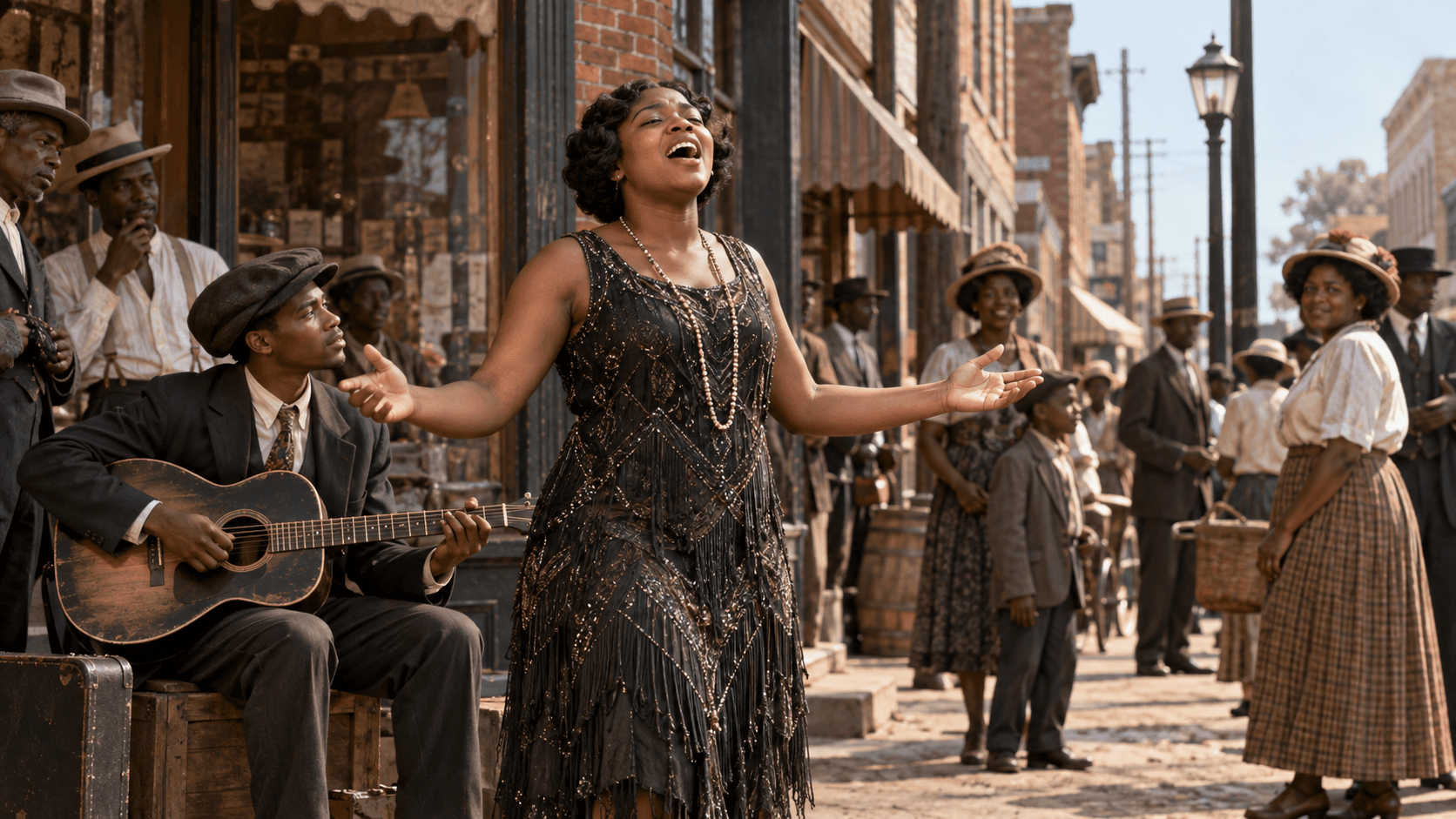
Long before Chattanooga became known for its riverfront attractions and outdoor adventures, a young girl was singing on its streets with a voice that would reshape American popular music.
Her name was Bessie Smith. She would become the “Empress of the Blues,” one of the defining performers of the 1920s and a lasting influence on blues, jazz and generations of singers.
Her story began not in a famous recording studio but amid the everyday life and music of Chattanooga.
A Childhood on Ninth Street
Smith was born in Chattanooga in the 1890s, with April 15, 1894, widely accepted as her birthday, although early records leave some uncertainty.
After the loss of her parents, she grew up with limited resources and began performing in public to help earn money.
She sang and danced on street corners with her brother Andrew, who accompanied her on guitar.
One important setting for that childhood was Ninth Street, a lively center of African American business, entertainment and community life that later became known as the Big Nine.
From Street Performer to the Empress of the Blues
In 1912, Smith joined a traveling entertainment company, beginning the journey that took her beyond Chattanooga.
She developed a powerful, expressive style that audiences could hear clearly even before modern sound amplification became common.
Her 1923 recording of “Downhearted Blues” became a major commercial success, helping make her one of the era's best-known recording artists.
Her performances carried both joy and sorrow, and her distinctive phrasing influenced later blues and jazz singers.
She died in 1937, but her recordings and reputation have continued to reach new listeners.
The Big Nine Was More Than a Street
The stretch once called Ninth Street, now Martin Luther King Boulevard, was a center for Black-owned businesses, music venues and social gatherings.
For generations, it provided opportunities for entrepreneurs and performers during an era when segregation restricted their choices elsewhere.
The sounds associated with the district were part of a much larger cultural movement that connected Southern communities through blues, gospel, jazz and live entertainment.
Remembering Smith means remembering the neighborhood and the people whose creative energy helped shape her earliest years.
Where Her Legacy Lives Today
At 200 East Martin Luther King Boulevard, the Bessie Smith Cultural Center preserves and celebrates Chattanooga's African American history.
The cultural center grew from the Chattanooga African American Museum, established in 1983, and later joined with the Bessie Smith Performance Hall under its present name.
Exhibitions, educational programs and community events connect music history with the lives and achievements of Black Chattanoogans.
The center also celebrates the heritage of the Big Nine district through programming that brings new generations into contact with its history.
Visitors should check the center's current hours and exhibitions before planning a stop.
One Local Thing to Remember
When someone mentions the blues, places such as Memphis or the Mississippi Delta may come to mind first.
But Chattanooga has its own important place in that story.
The next time you travel along Martin Luther King Boulevard, imagine a young Bessie Smith singing for passersby before the world knew her name.
A voice that helped define American music once echoed along these local streets. That is a Chattanooga story worth keeping alive. |
0 Comments
Join the conversation
Be the first to comment
Share your thoughts above.